Product Designer / Lead UI Designer
Role
2021-2024
Duration
In-house product team, business analysts, QA, development
Team
Tools
Figma, Principle, Jira
Premier Inn operates more than 800 hotels across the UK. Most people have stayed in one, or at least booked one. The brand has strong recognition and strong trust, but the website wasn't living up to either. It was running on an internal booking system built in the early 2000s, and the experience showed the age of the infrastructure underneath it.
When the company decided to move to a modern platform called Opera, it created the right conditions to actually fix the experience rather than just carry the old problems over to new technology. I joined as Senior UI/UX Designer and moved to a Product Designer position and led the design and experience work from research through to delivery.
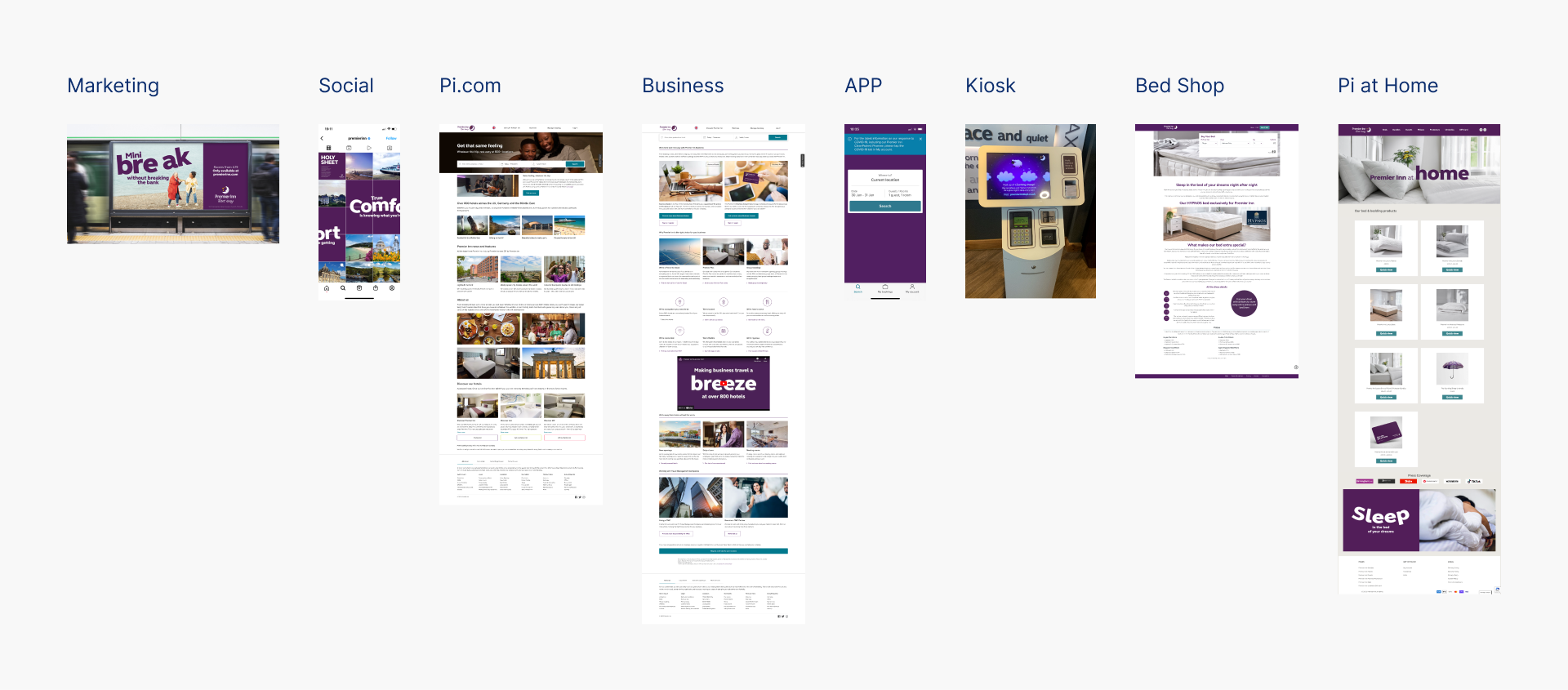
Understanding what was broken
Before anything else, I needed to understand where the existing experience was failing. I looked at the desktop site and the app, but the more useful conversations were with call centre agents and hotel staff. They were on the front line every day and knew exactly which parts of the booking journey were generating the most calls, the most confusion, and the most frustration.
Three areas kept surfacing: how guests compare rooms and rates, how they add extras like meals, and what happens when they need to change or cancel a booking.
Rooms and rates
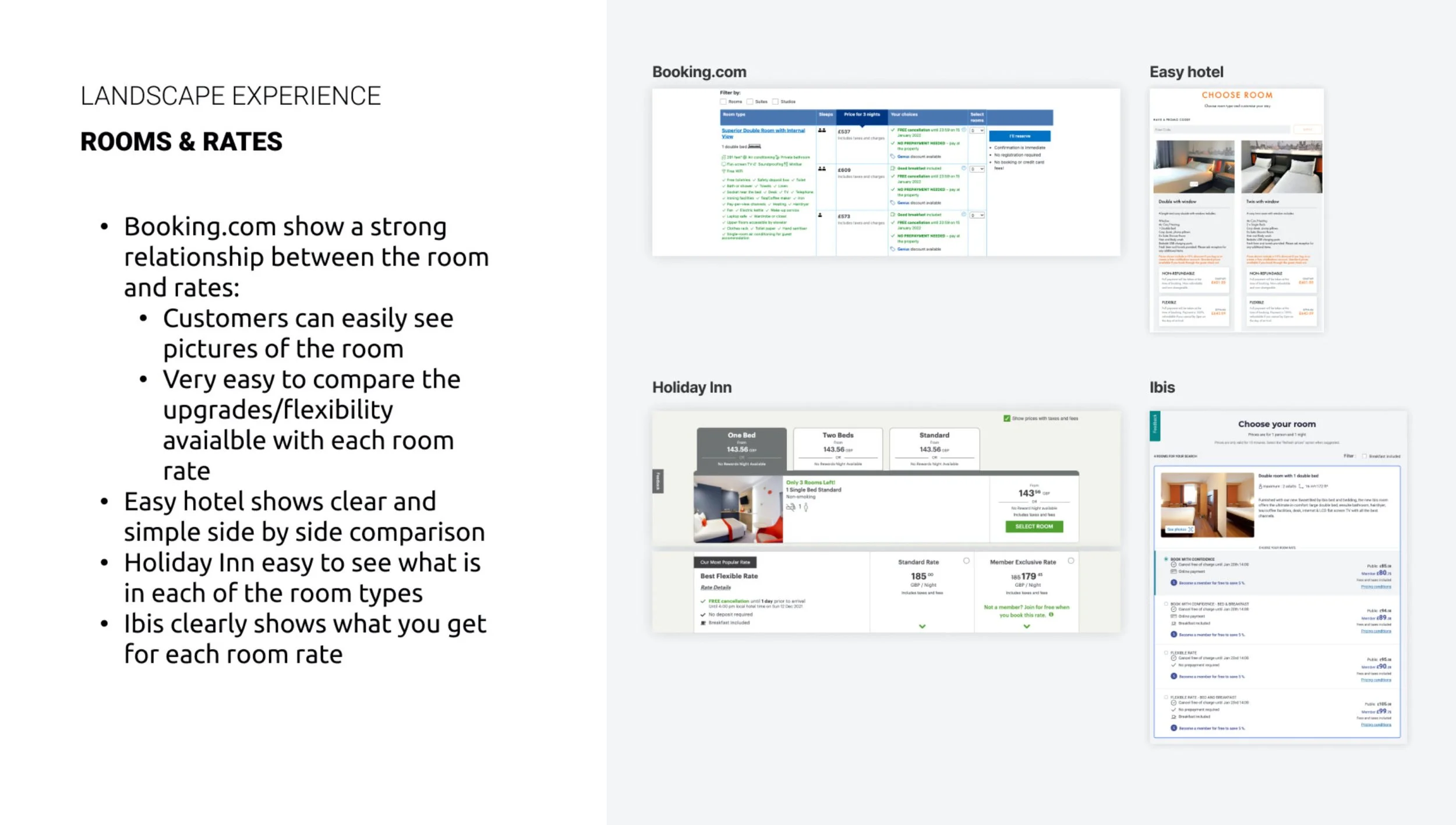
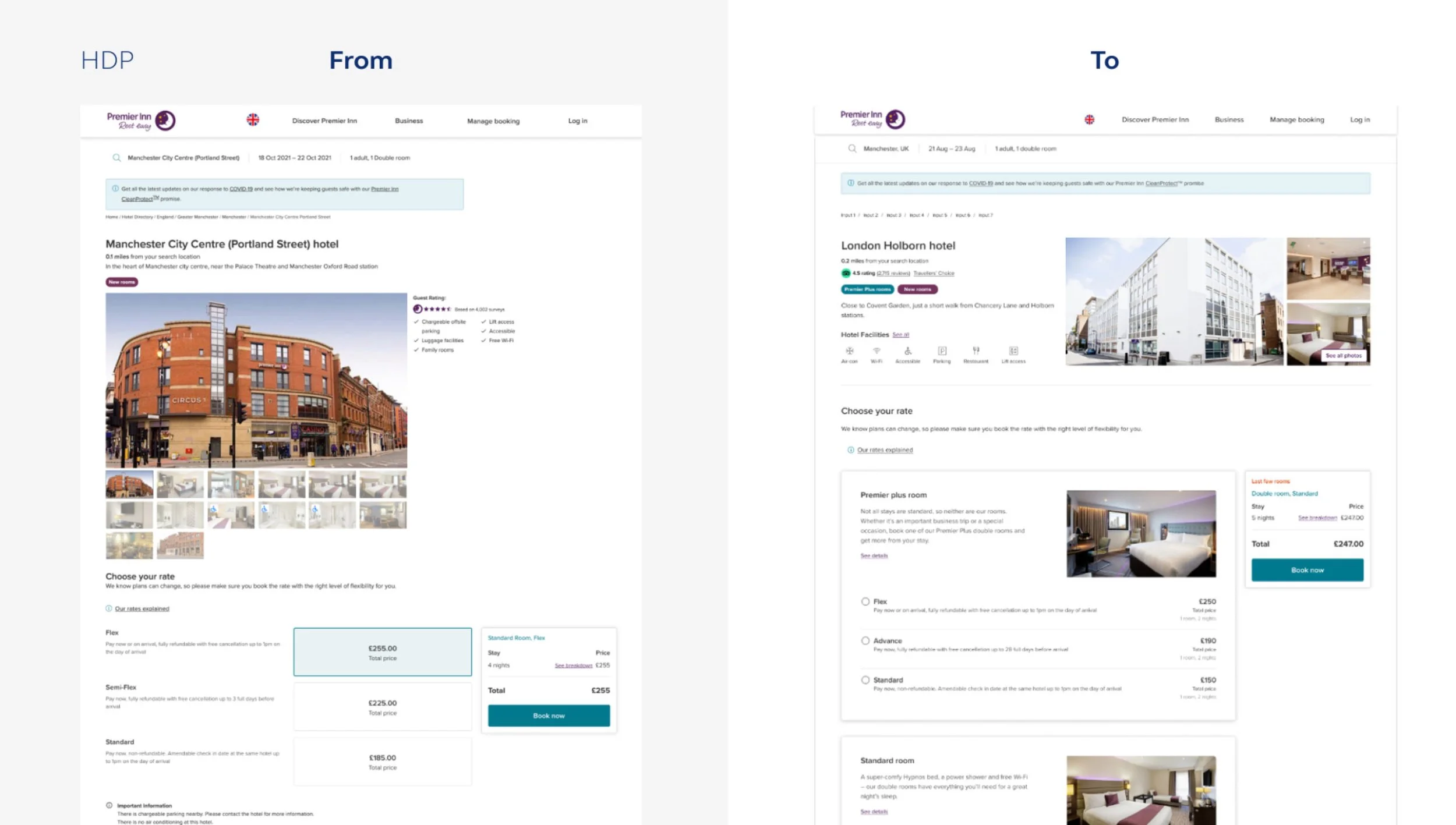
One of the clearest problems was that guests couldn't easily understand why one room cost more than another. The relationship between price and what you actually got wasn't legible. On top of that, the hotel details page opened with a large header that pushed the room options below the fold. Users had to scroll before they could even see a price. I brought the rate grid up above the fold and restructured it so the differences between offers were immediately readable. The logic of the pricing became visible.
Adding extras
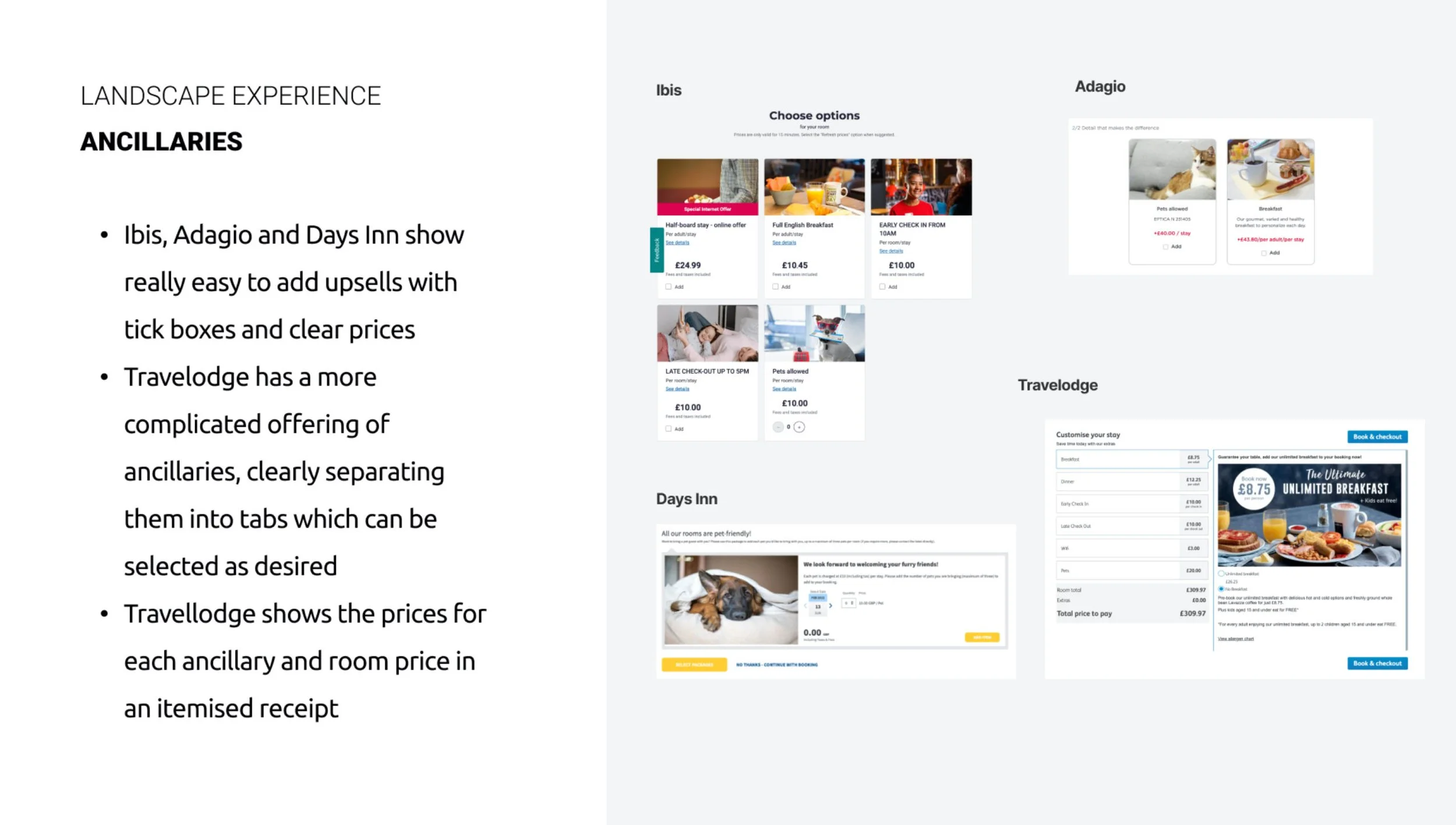
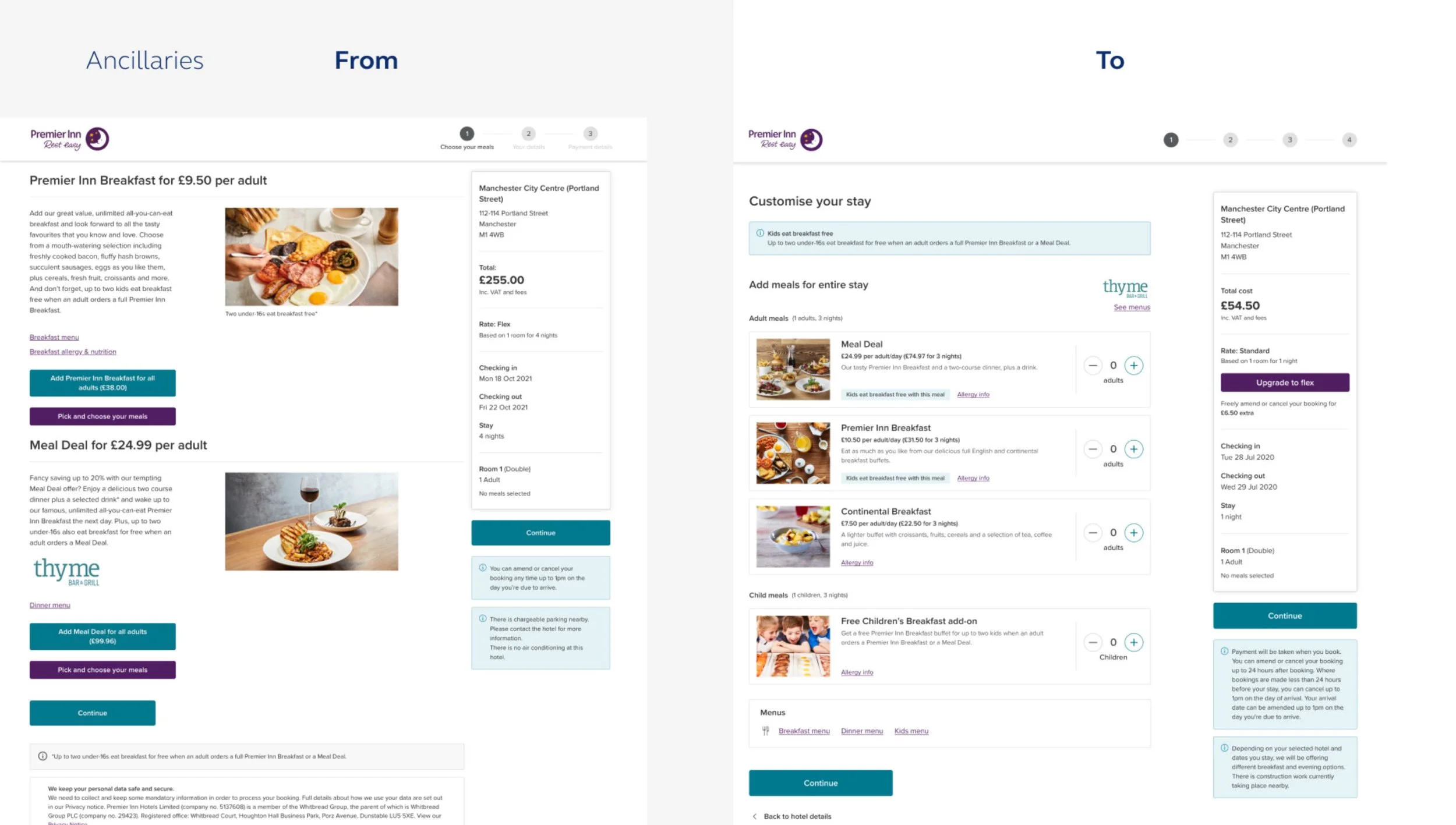
The meal and add-on page was cluttered and hard to parse. Pricing was difficult to follow and the layout didn't make the options feel worth having. I moved to a card-based layout with cleaner imagery and clearer pricing hierarchy.
I also changed how selections worked. Previously, guests could only apply a single meal plan across an entire booking. I updated the system so guests could choose different meal plans for different people in the same room. Allergy information was integrated directly into the selection flow rather than being a footnote somewhere else. That's a small thing that matters a lot to the right people.
Changing and cancelling
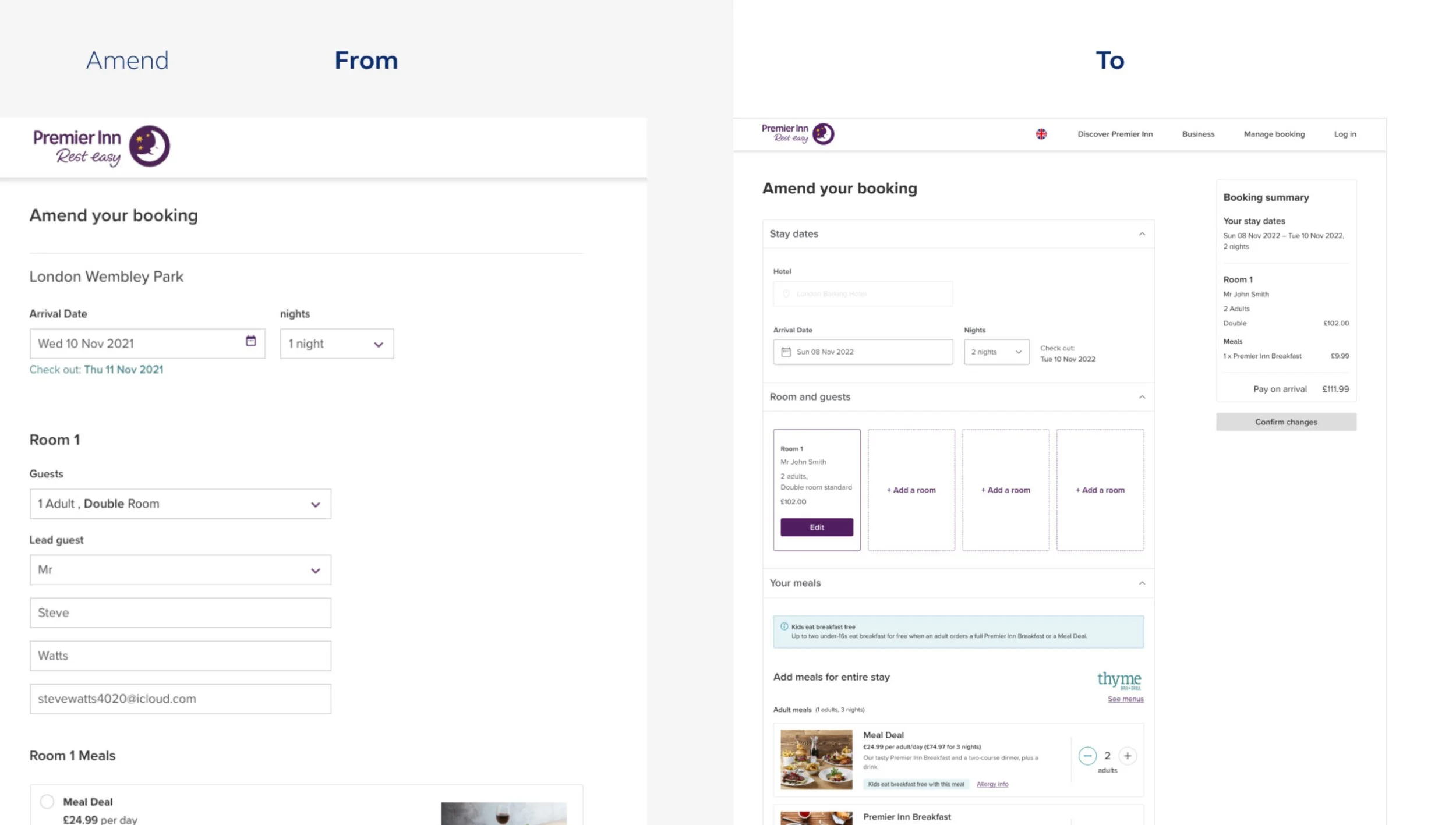
The amendment journey was limited. If plans changed, guests were largely expected to call. In a market where travel flexibility has become a standard expectation, that was a real problem. I designed a self-service flow that lets guests modify almost any detail of their booking: dates, number of guests, meal choices, or even the hotel itself, without touching the phone.
Results
Every design went through prototype testing with real users before going anywhere near the live site. Once we were confident in the direction, changes were rolled out through A/B tests on the live site. The new designs produced a 5% uplift in bookings. That sounds modest in isolation but it represents significant revenue at Premier Inn's scale.